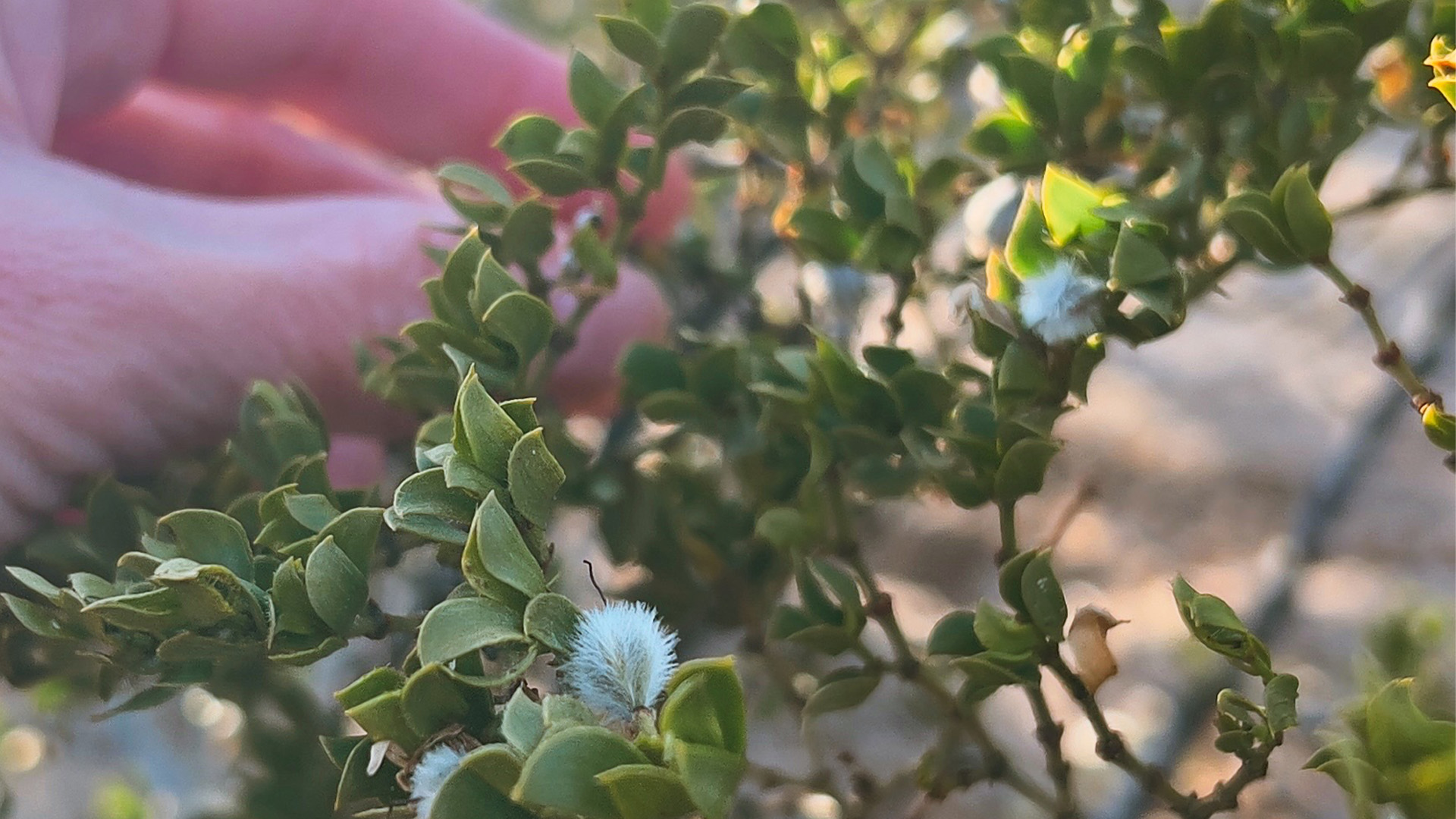
Creosote/Chaparral – Desert Medicine, Chemistry and Respect
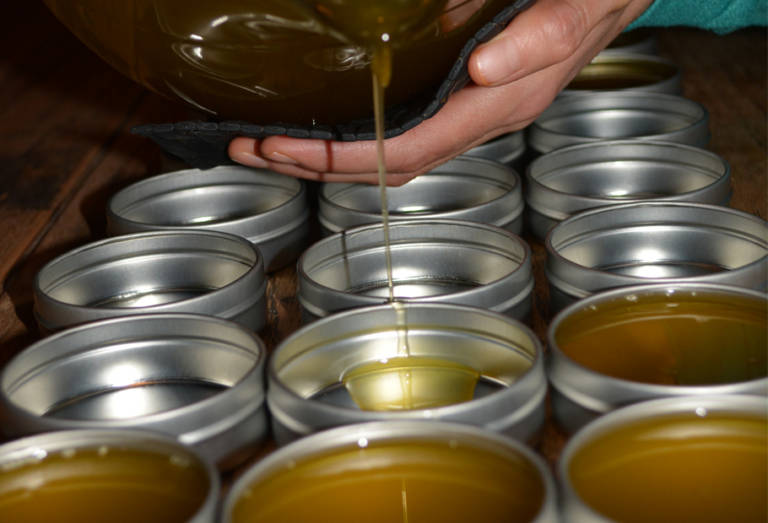
I recently started a new oil infusion with some chaparral leaves that I harvested in the Chihuahuan Desert on a recent trip to southern New Mexico. There’s considerable overlap in flora in southern and northern NM, but chaparral is not a plant we have access to in the north, and since we hadn’t harvested it in several years it’s going to be a treat to work with.
A plant shaped by aridity
Larrea tridentata is commonly called chaparral, gobernadora, hediondilla, creosote bush, and greasewood. In southern New Mexico this evergreen shrub dominates the vast Chihuahuan Desert. It is ancient, chemically complex, ecologically dominant, and medicinally powerful.
Creosote bush is native to the Chihuahuan, Sonoran, and Mojave deserts, spanning the Southwest and much of northern Mexico. It thrives in arid flats, desert grasslands, and rocky bajadas, often becoming the dominant plant where conditions are harsh and water is scarce.
A “bully” of the desert — by chemistry, not aggression
Creosote has a reputation for being somewhat of a bully – it’s an allelopathic plant which means it releases compounds that inhibit the growth of nearby plants. In a desert ecosystem, this isn’t aggression so much as efficient survival. Water, minerals, and microbial life are limited and creosote doesn’t waste energy competing, rather it sets boundaries and endures.
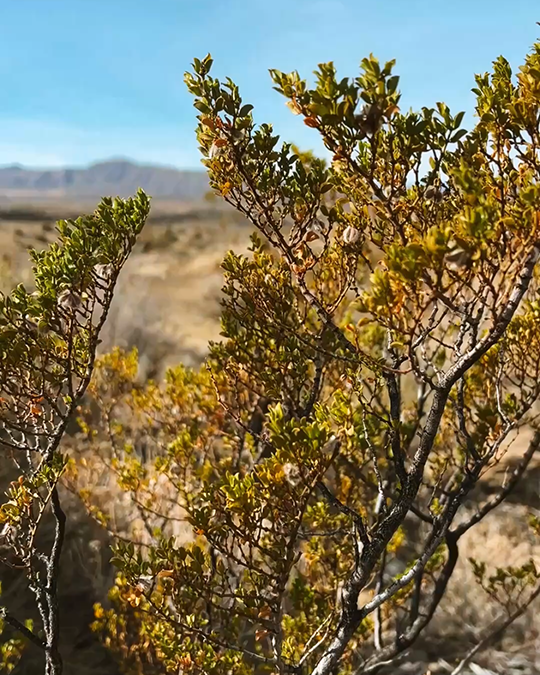
Because of this dominance, creosote is abundant and widespread, and is not generally considered at risk from responsible harvesting. That said, deserts regenerate slowly, and ethical harvesting still matters. Small amounts taken from many plants, never stripping a single shrub, and avoiding stressed or very old individuals are basic desert-medicine ethics.
And what about that unmistakable “desert rain” scent?
There’s nothing quite like that intense creosote scent when it rains. Rain doesn’t create the scent per se — it just helps the shrub release what it has been holding all along. Its leaves are coated in a waxy, aromatic resin that remains relatively dormant in dry conditions. Moisture softens and rehydrates the thick, waxy resin and the heat and humidity increase its volatility. Together, these elements create the rich, medicinal aroma many people associate with that desert rain smell. In fact, one of its common names in New Mexico is hediondilla which means “little stinker.”
The medicine: protective & strong
That thick waxy resin is rich in antimicrobial and antifungal compounds, which helps explain its longstanding traditional use reputation as a skin-level protector — especially valuable in hot, dry environments.
It’s prepared as oils, salves, liniments, washes, or poultices that are applied topically to support:
- Minor cuts and scrapes
- Skin irritations and rashes
- Insect bites and stings
- Fungal issues (including athlete’s foot)
- Sore muscles and joints
This is not a gentle plant. It is a boundary-setter, a protector, and a survivor. Topically, it works best when used thoughtfully, in small amounts, and with clear intention.
A note on internal use — tradition and risk
It’s worth noting that internal use of chaparral does exist in some traditional and regional practices, particularly in northern Mexico and older folk traditions. Accounts describe teas or decoctions taken for various internal complaints, and there are individuals who swear by its effectiveness. For example, I used to regularly see a sobador (traditional bodyworker) who asserted that a daily tea of chaparral cured him of liver woes. Also, Michael Moore describes internal use of chaparral for impaired liver metabolism and other conditions in his book Medicinal Plants of the Desert and Canyon West.
On the flip side, there are documented cases of serious liver injury associated with internal ingestion of chaparral. These reactions appear to be random and unpredictable — meaning some people may tolerate it, while others experience significant harm. Because of this, most contemporary herbalists consider chaparral a plant best reserved for external use only. Honoring tradition does not require ignoring risk, and safety does not require erasing history. Both truths can coexist.
A desert teacher
Creosote bush teaches restraint, efficiency, and respect. It survives by knowing its limits and enforcing them — chemically, spatially, and energetically.