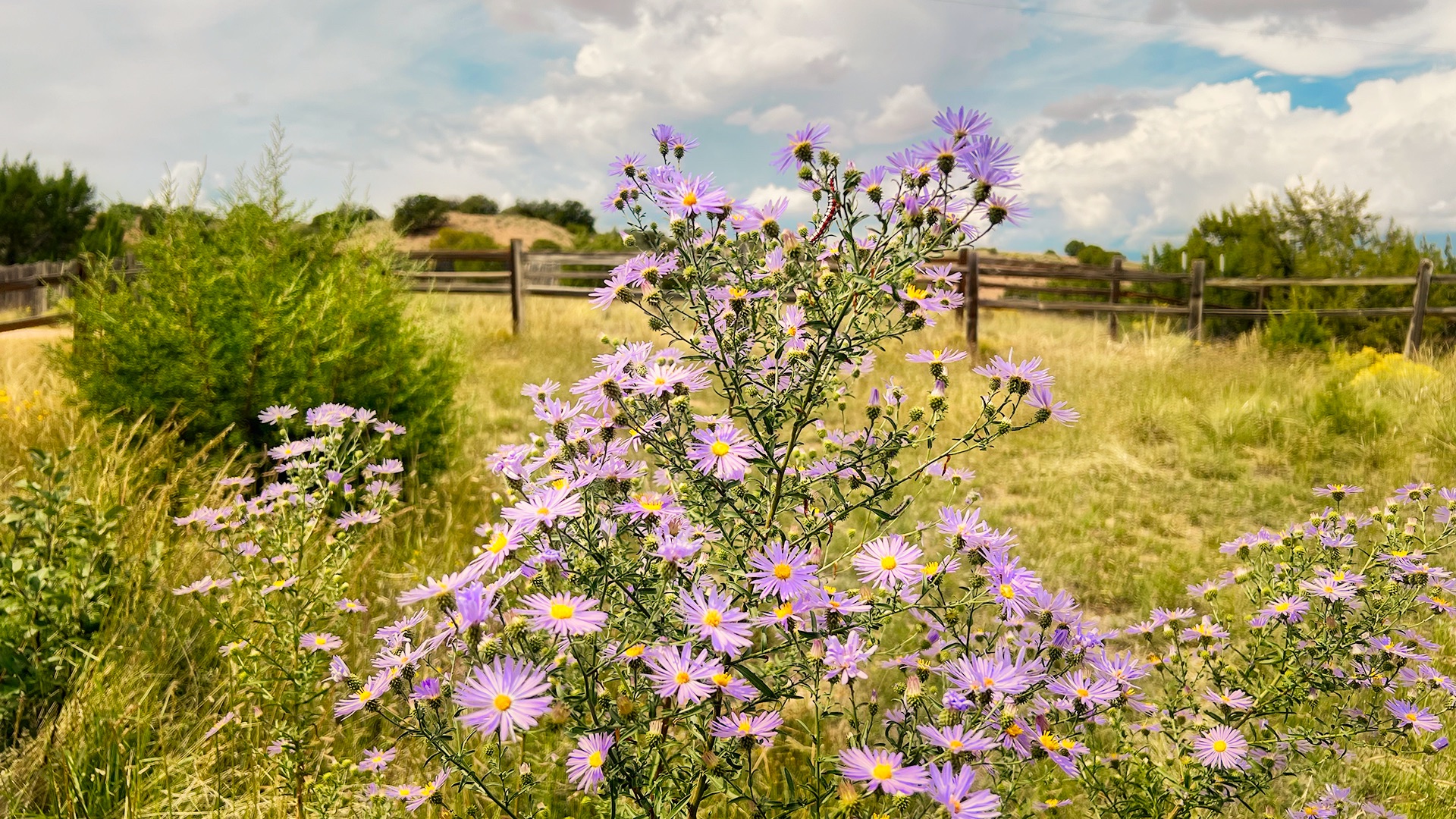
Fostering a Native Landscape
Fostering a native edible and medicinal landscape & pollinator garden.

Last summer, I did a native seed giveaway on Instagram and several folks asked me if I’d send along instructions/guidelines for planting – so below is my effort to help guide you along.
I encourage you to experiment since we all have different soil types, water, sunlight, hardiness zones, etc. I live in the drylands of northern Santa Fe County, right above an acequia-irrigated valley. The sun is plentiful and the soil is very rocky and clayey. I do reclamation with native dryland plants on my property. You might have a completely different environment. But for what it’s worth, below are some things I’ve done for the past several years to foster a native edible and medicinal landscape:
❈ first of all, please consider that many native plants can be VERY FINICKY. Just because a plant doesn’t pop up one year doesn’t mean it won’t come up the following year(s). So don’t assume the seed was bad or that you did something wrong. Some native plants just wait for really specific conditions (like a cold wet winter, for example). I’ve spread seeds that took several years to finally experience their preferred conditions before they sprouted. Patience is non-negotiable.
❈ you might want to consider spreading half the seeds in a contained/controlled area at first so you can see what comes up, and save the other half for later use based on your results. For example, I have two whisky barrels that I planted (in spring) with a native seed assortment. Although it was a small area with just one soil type (sandy loamy), it was a good way to see what plants came up with that particular soil, sunlight, and the amount of water it received. This is also a great starting point to ensure some level of guaranteed success so I could collect seeds to continue spreading throughout my landscape in following years without having to buy more seeds.
❈ sometimes I like to do a combo – I’ll plant half a packet in beds or containers, and the other half is spread freely on my land. I have almost 2 acres so it’s a large area to cover. For a small city lot, you might want to just plant them all in containers or beds — it just depends on your yard situation.
❈ I’ve purchase a lot of seeds from Plants of the Southwest over the years – the seed packets have instructions (sow in fall, sow in spring, sow whenever). I sometimes follow their instructions but if I’m being honest, I usually just sow whenever I get the chance or inspiration even if that’s not the specific instruction. I’ve found that if you manage your expectations, it really doesn’t matter when you sow if you’re ok with potentially waiting a few seasons to see any activity. For example, if you sow in spring when you should have sowed the autumn before, you might have to wait a whole extra year. A situation like this usually has to do with cold stratification, which you can also do artificially in your freezer. So do it however you want according to your level of patience and expectations!
❈ when it comes to native plants, I personally favor sowing directly into ground. But you always have the option to start seeds in flats or small pots to transplant later.
❈ finally, you also have the option to skip any controlled areas like beds/containers and just spread the seeds freely in your landscape and see what happens. If you do this, I suggest dropping some of the seed into natural cracks or gravely areas in the soil so they don’t all get carried away by the wind. I have done this a lot on my land over the years in areas where the soil isn’t amended or irrigated – they rely solely on rain and snow. This is the most challenging ways to get wildflower seeds to sprout, but if/when they do they’re usually the hardiest! With this approach you’ll put in the least amount of effort, but you might also get the least amount of satisfaction.. at least for a few years. My best examples of this is my Rocky Mountain Bee Plant and Scarlett Globemallow. Last year my bee plant put on quite a show for me and I must have spread those seeds about 5 years ago! And now this year I have a ton of sprouts already because of the prolific amount of seeds. It was worth the wait.
❈ once you have a season of wildflower success, collect seeds to plant elsewhere in your yard and if you have an abundance, share with others, and/or spread some along arroyos/roads, etc. in your neighborhood to try to help combat invasive species while also supporting pollinators. And always make sure you leave enough behind for the birds 🙂
Wishing everyone an abundance of wildflowers this year (and every year)! 🌼🙌🏽✨💚