Goldenrod: Seasonal Allergy Support & Food for the Bees
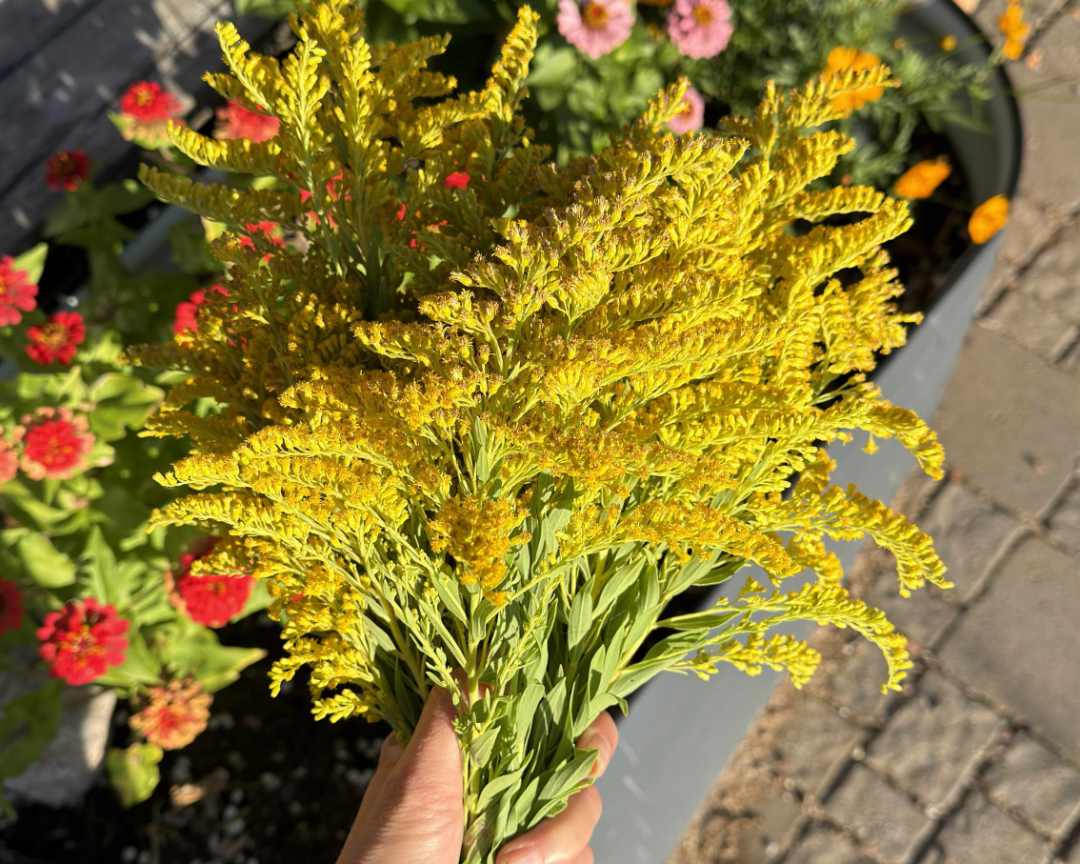
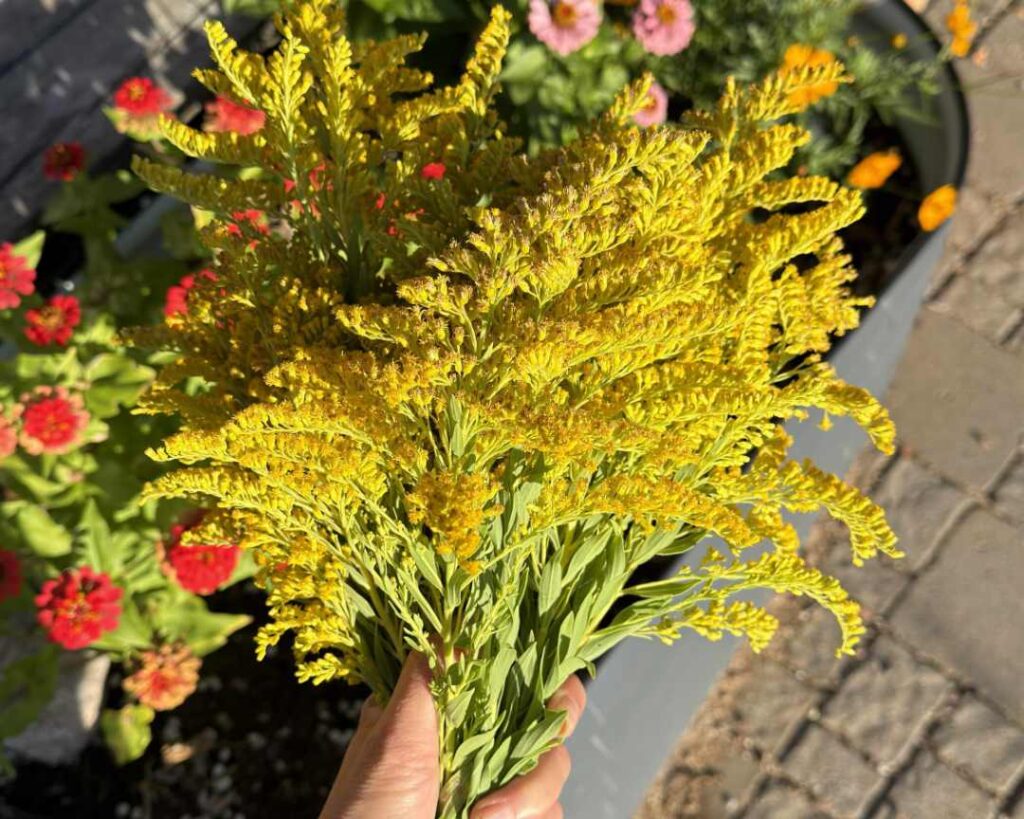
Goldenrod (Solidago spp.) is lighting up the landscape right now with its unmistakable plumes of yellow. And despite its reputation, this late-summer beauty may be more friend than foe during allergy season.
Does goldenrod cause allergies?
Goldenrod often gets blamed for the sneezing, itchy eyes, and runny noses that arrive in late summer and early fall. But goldenrod pollen is relatively heavy and sticky and is primarily carried by insects—it isn’t particularly well suited to blowing around in the wind.
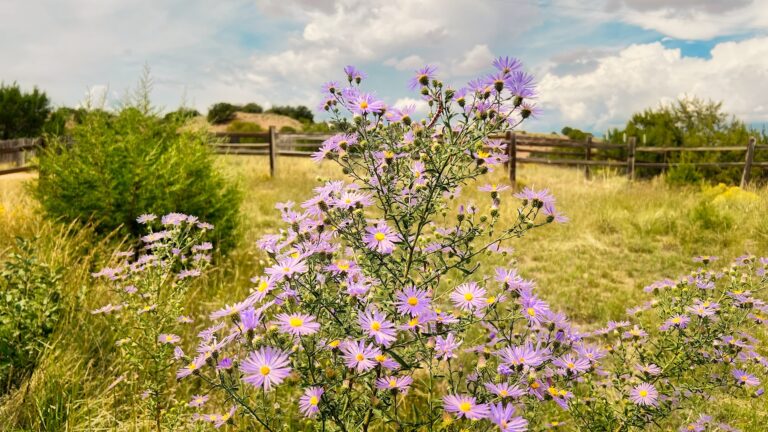
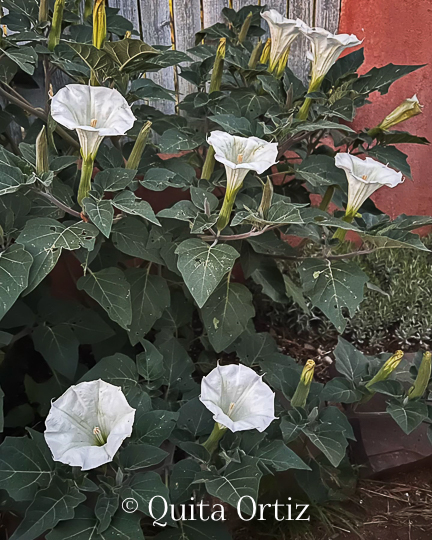
The more likely culprits are añil del muerto, ragweed, and kochia, all of which bloom around the same time. Ragweed’s tiny, inconspicuous flowers produce large quantities of lightweight, windborne pollen. Goldenrod just happens to be much more noticeable, so it has historically taken much of the blame.
Ironically, goldenrod has a long history of traditional herbal use for seasonal allergies and the upper respiratory system, particularly when there is congestion and excess mucus.
Making fresh goldenrod tincture
We recently harvested a small amount of fresh goldenrod flowering tops—flowers, tender upper leaves, and stems—to make a tincture.
Goldenrod contains an interesting spectrum of plant compounds, including flavonoids such as quercetin and rutin, phenolic compounds, tannins, and aromatic volatile oils. A hydroalcoholic tincture allows us to capture a broad range of these constituents from the fresh plant.
I decided on 65% ABV at 1:2 ratio. You don’t need a super high alcohol menstruum to get a good broad-spectrum extraction of the flowering tops. Around 60–65% gives you plenty of alcohol for the aromatics while retaining more water for the flavonoid/tannin side of the plant. Now I just shake and wait for about 6 weeks! Shake and wait, shake and wait.
The flowering tops tincture or flower essence of goldenrod can be particularly helpful with pollen allergies. Indications: runny nose, dull red eyes, itchy nose. And according to Matthew Wood, goldenrod may even be helpful for food allergies as well.
Harvest lightly and leave plenty for the bees
Goldenrod isn’t just medicine for humans. It’s also an incredibly important late-season source of nectar and pollen for native bees, honeybees, butterflies, and other insects.
At a time when many summer flowers have finished blooming — plus considering the exceptional drought we’ve endured this year — a stand of goldenrod can be buzzing with life.
That’s why we harvested only a little from this patch. Ethical wildcrafting isn’t about taking everything that’s available simply because it’s abundant. It’s about recognizing that we’re part of a much larger community that depends on these plants.
A little medicine for us, and plenty left for the bees.